Revision Liposuction in Cheongdam, Gangnam — fixing a result from elsewhere.
Revision liposuction at ARTNER Cheongdam corrects asymmetry, lumps, divots, over-resection and residual fat left by a previous procedure — often done years earlier, at another clinic or abroad. It combines ultrasound scar release with selective removal and fat grafting to refill, and it is among the most demanding work in liposuction: revised tissue is scarred, adherent and less elastic. Performed awake in Gangnam by a director who does revisions regularly, best timed 9–12 months after the first surgery — and quoted with an honest ceiling of roughly 60–80% correction, not a reset.
What can revision liposuction fix — and what can it not?
Revision liposuction at ARTNER Cheongdam, Gangnam corrects contour irregularities, asymmetry, divots, lumps, over-resection and residual fat left by a previous procedure by addressing the scar tissue and anatomical changes that surgery created. Revised tissue is scarred, fibrotic and less elastic, so ordinary technique falls short: the director uses ultrasound to release scar first, then selective removal and fat grafting to refill — usually 9–12 months after the original operation.
It's a specialty within liposuction: revised tissue has scarring, fibrotic adhesions and reduced elasticity, so ordinary technique falls short. Dr. Pyeon uses VASER to release scar tissue first, then selective fat removal and fat grafting to refill over-resected areas. Best timing is usually 9–12 months after the first surgery, once tissue has settled — and we're honest that a realistic result is typically 60–80% correction, not a full reset.
How does a revision case run at ARTNER Cheongdam?
With revision, an honest assessment and the right sequence matter as much as the procedure.
History & mapping
Your prior surgery is reviewed and every irregularity mapped — often 30+ marks — with ultrasound of the scar depth.
VASER scar release
Ultrasound frees adherent skin and releases scar tissue first — the critical step before any fat is removed.
Selective correction
Residual fat is removed only where needed, carefully avoiding zones that are already over-resected.
Fat grafting to refill
Where too much was taken, your own fat is grafted back to restore a smooth contour.
Is my case residual fat, over-resection, adhesion — or too soon?
Revision starts with an honest diagnosis of what the first surgery left behind. Four answers ARTNER Cheongdam gives before you book a flight to Korea — including the one that says wait.
Fat simply left behind
Under-treated zones or a missed layer. Selective removal with VASER in Cheongdam where scar has formed — the most predictable revision, and the closest thing to a straightforward second pass.
Divots and hollows
Where too much was taken, fat cannot be put back with suction. Your own fat is grafted to refill, and a portion resorbs — so a top-up session is sometimes part of the honest plan.
Skin stuck down, lumpy texture
Fibrotic bands tether the skin to deeper tissue. Ultrasound releases the scar before anything is removed; this is the step that makes or breaks a revision result in Gangnam.
Under 9–12 months, or unhealed
Tissue is still settling and an assessment now would be unfair to both of us. ARTNER Cheongdam will tell you to wait rather than operate early — and active infection or an unhealed area is an absolute stop.
Send photos from several angles and, if you have them, your prior operative notes on WhatsApp — Dr. Pyeon's team in Cheongdam replies within 24 hours with a straight read on what is realistically fixable. Compare every technique: liposuction in Cheongdam, Gangnam.
Which techniques does revision combine in Cheongdam?
Revision is rarely a single-technique procedure — it usually combines several to address scar tissue, residual fat, over-resection and laxity at once. Here's how the core techniques compare.
| Technique | Best for | Recovery | Skin tightening |
|---|---|---|---|
| Tumescent (standard) | Soft fat, smaller volumes, first-time | 5–7 days | Minimal |
| VASER (ultrasound) Your option | Fibrous fat, definition, revision | 5–7 days | Moderate |
| Water-jet (WAL) | Combined fat-grafting cases | 5–7 days | Minimal |
| Laser-assisted | Mild skin laxity, smaller volumes | 5–7 days | Mild–moderate |
| 360° (full torso) | Abdomen + flanks + back combined | 7–10 days | Technique-dependent |
Dr. Pyeon selects the technique with you at consultation, based on a physical exam of your fat type, skin elasticity and goals — not a one-size-fits-all default.
Who is a good candidate for revision — and when should you wait?
A good candidate if you…
- Are unhappy with asymmetry, lumps, divots or residual fat from a prior lipo
- Had your first procedure long enough ago for tissue to settle
- Want an honest second opinion on what's realistically fixable
- Have prior surgery from abroad and want experienced revision care
Please wait or reconsider if you…
- Had surgery under ~9–12 months ago — tissue usually needs to settle
- Expect a perfect reset — revision typically corrects 60–80%
- Have any active infection or unhealed area
- Are pregnant or breastfeeding (please wait)
Recovery
- Office-recovery is typically 7–10 days
- Grafted fat needs gentle handling in the early weeks
- Revised areas can feel firmer at first as they settle
- The final result settles over 6–9 months
Honest risk disclosure
- Revision improves contour but cannot fully restore virgin anatomy
- Realistic correction is typically 60–80%, not 100%
- Grafted fat partially resorbs; a touch-up is sometimes needed
- Scarred tissue heals less predictably — we tell you this before you decide
How many days in Seoul does revision liposuction take?
Revision runs 2–4 hours awake and settles more slowly than a first procedure. ARTNER Cheongdam plans about ten days in Gangnam.
Send photos and notes
Photos from several angles plus prior operative notes → an honest read on what is fixable, the realistic percentage, a KRW quote and a suggested stay within 24 hours.
History & mapping
The prior surgery is reviewed, every irregularity mapped — often 30+ marks — with ultrasound of scar depth, alongside blood work, ECG and internal-medicine review.
Release, correct, refill
Ultrasound frees adherent skin and releases scar first, then residual fat is removed selectively and your own fat is grafted into over-resected areas — awake, never general anesthesia.
Recover in Gangnam
Office recovery is 7–10 days; grafted fat needs gentle handling, so no pressure on the treated area. Stitches and first aftercare around day 7.
2–3 weeks
Cleared once incision sites and swelling are checked in Cheongdam. Revised areas can feel firmer at first as they settle.
The honest timeline
Revised and grafted tissue settles more slowly than a first case — the final result is judged at 6–9 months, with photo review on WhatsApp and a touch-up discussed only then.
Rule of thumb from ARTNER Cheongdam: about 10 days in Seoul, and 6–9 months before the result is final. Week by week: liposuction recovery timeline in Korea.
Is ARTNER liposuction registered in Korea?
ARTNER's signature liposuction protocol — ART-FAT — is registered with the Korean Intellectual Property Office (특허청). Revision work applies that patented, director-performed, awake standard to correcting a previous result.
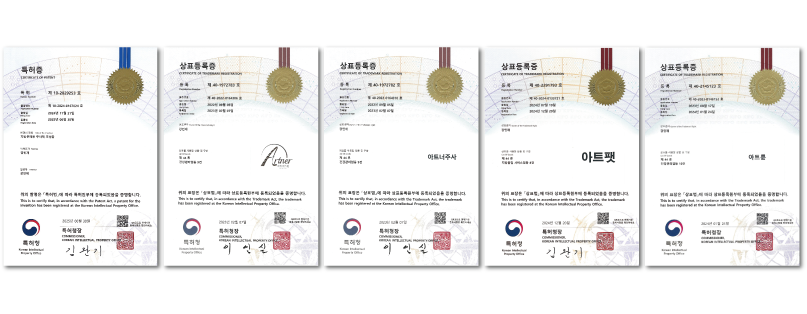
Registered with the Korean Intellectual Property Office (KIPO). Certificate numbers available on request.
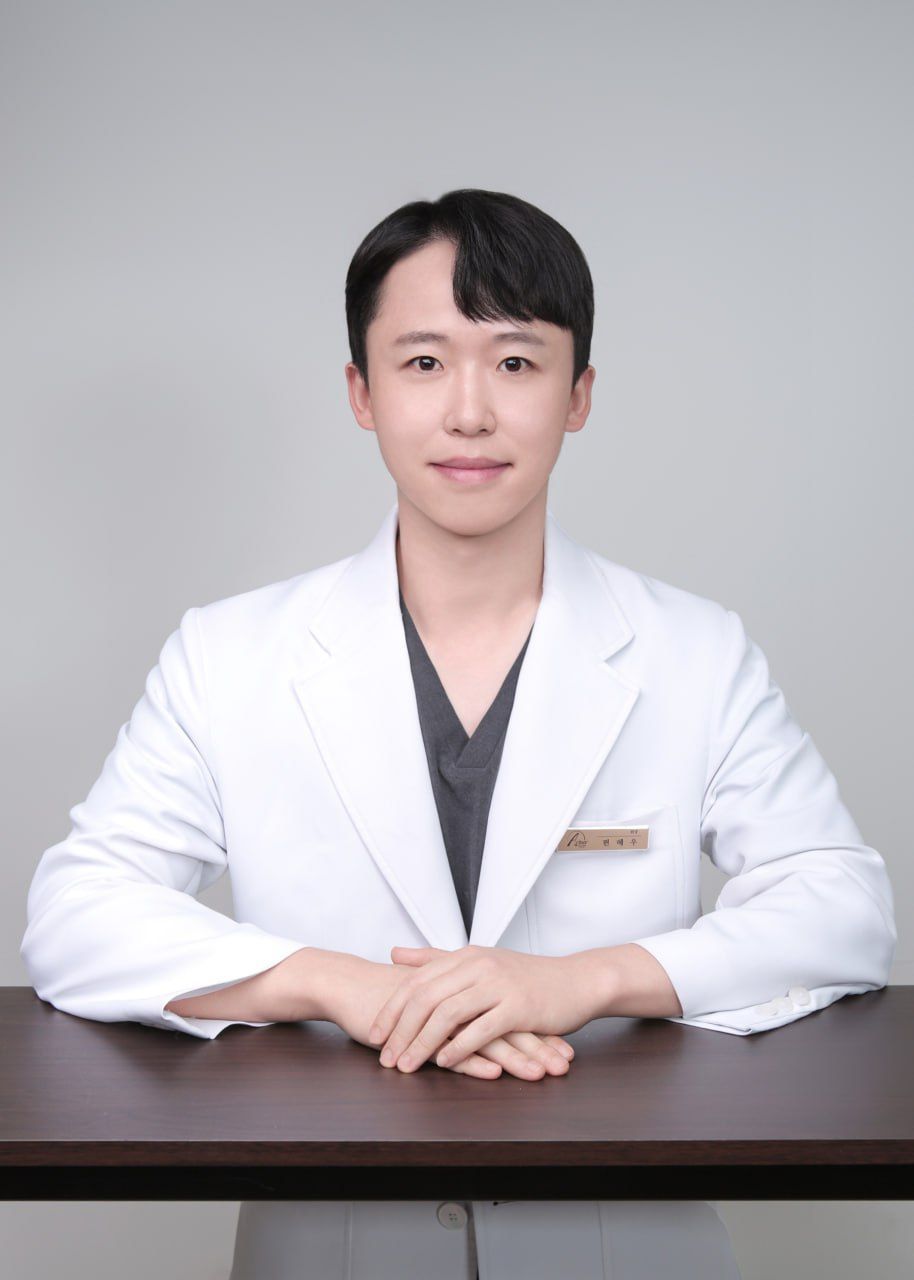
Why we state the realistic ceiling first — the director on revision
Revision is a specialty, and honesty comes first. Most surgeons do only a handful a year; at ARTNER Cheongdam I do them regularly. I would rather tell you plainly that we can correct 60–80% than promise a reset I cannot deliver.
- Dr. Hye-woo Pyeon — Internal Medicine Specialist, Director of ARTNER Cheongdam
- Yeungnam University College of Medicine · Sungkyunkwan University Bioengineering
- Former Internal Medicine Specialist, Gachon University Gil Medical Center
- Clinical Advisor to TuneFace, TuneBody, Accent Prime & Alvogen Korea · Qwo Cimia Key Doctor
- Member — Korean Society for the Study of Obesity & Korean Association of Internal Medicine
Revision liposuction in Cheongdam, Gangnam — questions answered.
Often, yes — ARTNER Cheongdam regularly corrects asymmetry, lumps, divots, over-resection and residual fat from procedures done elsewhere in Korea or abroad. Send photos from several angles and prior operative notes if you have them, and we will tell you honestly what is fixable.
Usually 9–12 months, so tissue has settled enough for a fair assessment and safe correction. Operating earlier risks judging swelling rather than the true contour; if your first surgery was recent, we will tell you to wait rather than book you in.
Revision improves contour — smoother, more even, better balanced — but typically corrects around 60–80%, not a perfect reset. Scarred tissue heals less predictably than virgin anatomy, and we state that ceiling before you decide rather than after.
Ultrasound releases scar tissue and frees adherent skin first, then residual fat is removed selectively while avoiding already over-resected zones, and your own fat is grafted back to refill divots. Awake, under tumescent local anesthesia with light sedation, in a 2–4 hour session.
Yes — like all liposuction in Gangnam here, revision is done awake with no general anesthesia, and performed personally by the director rather than delegated.
ART-FAT is priced per area with unlimited extraction: ₩1,190,000 for most zones and ₩1,630,000 for arms, full abdomen and outer thighs; 360 full torso is ₩4,890,000 and the 6-week Body program ₩5,990,000. KRW, ex-VAT, identical to the Korean price list at ARTNER Cheongdam — no foreigner surcharge and no per-litre fee.
Revision is quoted in writing at consultation rather than listed, because the plan depends on how much scar release, selective removal and fat grafting your case needs. KRW, ex-VAT, with no foreigner surcharge — see the Cheongdam price list for the per-area procedures it draws on.
A portion integrates permanently and becomes your own tissue; some resorbs over the first months, so the immediate result is not the final one. ARTNER Cheongdam judges at 6–9 months and discusses a touch-up only then.
About 10 days: mapping on day 1, the procedure day 2–3, recovery with stitches and first aftercare around day 7, then fly 2–3 weeks after. The result itself takes 6–9 months to settle.
Office recovery is 7–10 days; grafted areas need gentle handling with no pressure in the early weeks, and revised zones often feel firmer at first as scar tissue remodels. The final contour settles over 6–9 months.
That is exactly what the ultrasound release step targets — freeing fibrotic bands that tether skin to deeper tissue. It improves texture and mobility, though heavily scarred areas may never regain fully normal glide.
Liposuction does not remove skin. If laxity is the main issue, ARTNER Cheongdam discusses a tightening-led plan or a surgical option honestly rather than performing a revision that will not address it.
They help but are not essential. Prior operative notes tell us what was taken and from where, which shortens the mapping; without them we assess by examination, ultrasound and photographs.
Yes, where the plan stays within safe limits for one session. Larger corrections are staged across visits — revision is precision work, and rushing several zones at once tends to compromise the result.
2F–3F, 38 Apgujeong-ro 80-gil, Cheongdam-dong, Gangnam-gu, Seoul — a flat 5-minute (580 m) walk from Apgujeong Rodeo Station Exit 4 on the Suin-Bundang Line, 60–90 minutes from Incheon Airport. Building parking is available; Imperial Palace, Park Hyatt Seoul and Glad Gangnam Coex are recommended recovery hotels nearby. Open Mon–Fri 10:00–20:00, Sat 10:00–17:00.
Yes — in English, with Chinese (中文) and Japanese (日本語) support, led by international-patient coordinators alongside Dr. Pyeon. Send photos of the area on WhatsApp; ARTNER Cheongdam replies within 24 hours with a candidacy read, the recommended technique, a KRW quote and a suggested length of stay, and all consent and aftercare paperwork is in English.
Explore other techniques in Cheongdam.
VASER in Cheongdam
36 kHz ultrasound emulsifies fibrous fat and releases scar tissue.
Awake Liposuction in Cheongdam
Local anesthesia only, patient fully conscious — no general anesthesia.
360 Liposuction in Cheongdam
Abdomen, flanks and back in one continuous awake session.
Send your photos for an honest read — ARTNER Cheongdam, Gangnam.
Dr. Pyeon's team in Cheongdam replies in English with a straight answer on what revision can realistically improve for you — including when the answer is to wait — and a clear next step. Prior operative notes help if you have them.
Individual results vary. Liposuction is a surgical medical procedure performed by a licensed physician at ARTNER Cheongdam, Gangnam, Korea after consultation, carries risks, and is not suitable for everyone. This page is educational information, not medical advice, provided under Korean medical advertising regulations. Prices are in KRW, exclude VAT, are identical to the Korean price list, and are confirmed at consultation. ARTNER Cheongdam · 2F–3F, 38 Apgujeong-ro 80-gil, Gangnam-gu, Seoul · Apgujeong Rodeo Station Exit 4, 5 min · Contact & directions · Cheongdam price list.